Hearing what your animals have to share with you about what they are feeling and wanting, and what life is like from their perspective, can be powerfully life-changing.
Here are 5 tips to help you get the most from your session with your animal friends.
Dear Intuitive One,
Animal communication sessions give you the space to step out of the busyness of life and into the heart and soul space of listening to what your pets are feeling and needing at this time.
Whether this is your first animal communication session ever (yeah for being brave and trying something new!), or if you’ve worked with an animal communicator before, there are 5 things you can do to prepare and help you get the most from your session with your animal friends.
Five tips to help you prepare for your animal communication session
1. Talk with your pet about the session
Starting a few days before your conversation, please tell your pet (even animals who are deaf) in your own words out loud about the session. When talking with them, relax your breathing and speak from your heart.
Be sure to let your animal friend know why you have booked an animal communication session (example: to understand how they are feeling about a particular situation). This helps them know what to expect and what it is you want to talk with them about. And be sure to give your animal friends permission to speak to me during their session. Tell them that whatever it is they have to share with you, it will help you find a solution to help them feel better.
2. Have your questions ready
Hearing what your pets are feeling and thinking is an amazing experience! So amazing in fact, it can be easy to forget important questions that you want to ask during your session. I encourage you to give yourself the time before your session to write down your questions in order of importance what you want to ask your animal friends. If you would like a little help knowing what to ask and how, you will find some helpful tips on asking questions on my blog post, “Five questions to ask your pet in every animal communication session”. You’ll find that post by following this link
As you're getting your questions ready, remember that as an animal communicator, it is out of my scope to diagnose medical conditions, prescribe medical treatment, or suggest medicine of any kind.
AND…. with all that said, while we obviously can’t ask them questions like, “Do you have a bulging disk?”, we CAN ask them questions like, “Tell me about what your back feels like when you jump in the car..”
3. Be in a quiet place to cozy in for our call
Choose a quiet place without distractions, away from TV noise and any noisy family members. Choose a space where you can be comfortable, feel at ease, and where you can be with your animals (when possible). Things like driving, multitasking or having extra people pop by to listen to the call can take away from your experience and make it challenging for me to communicate clearly with your animals.
A few comfy things to have on hand:
Something nurturing to sip (things like hot or iced tea can help you stay present and in the now)
Tissues (if tears flow, you’ll want to have these on hand)
A cozy throw or blanket (just to wrap yourself up in case you are craving that level of support)
A journal and pen (to jot down things that you’ll want to remember)
Any other comfort measures that you’d like to have around you (this session is about helping you connect with your pet, but it is also about you and your comfort. If you show up to your session in cozy flannel pj’s, that’s totally okay.)
A note about Tech:
If you are joining a Zoom session on your phone, please find a way to prop up your phone, rather than holding it, so there is minimal movement of your phone. Too much movement can create a ton of visual distraction and make it challenging to tune in with your pets.
4. Taking notes and session recording
If you’d like to record your session, please choose a Zoom call and let me know at the start of your session, so I can record the session for you.
Please note, I don’t consent to voice recordings or video recordings of sessions using your own device, including your phone.
If you don’t want a recording, I encourage you to have a notepad and pen ready to take notes of the important, life-changing, and wise things your animal friend wants to share. Most pets have insightful things to share about their life with you.
5. Let your animals be themselves
It is okay to let your animal do what they normally would do. Hanging out in the quiet of the backyard, barn or sleeping during a session are all perfectly okay. It is best if your animal friend is quiet without a lot of distractions, so no epic games of Chuck It or hunting mice in the garden while we are talking with them!
Your pets can be in the same room as you, or not. OFTEN animals get still during a session; some even fall deeply asleep. Not ALL animals, mind you, but many do. If your best animal friend tends to be a super busy bee, let them. Chances are it won’t take away from our call in the least. It is most important that you are both comfortable for the duration of your session.
Lastly, if you're reading this because you already have a session booked with me… I want to say I am so excited to have the chance to work with you and your pets. I hope that our time together helps you and your pets understand one another better.

A little about me
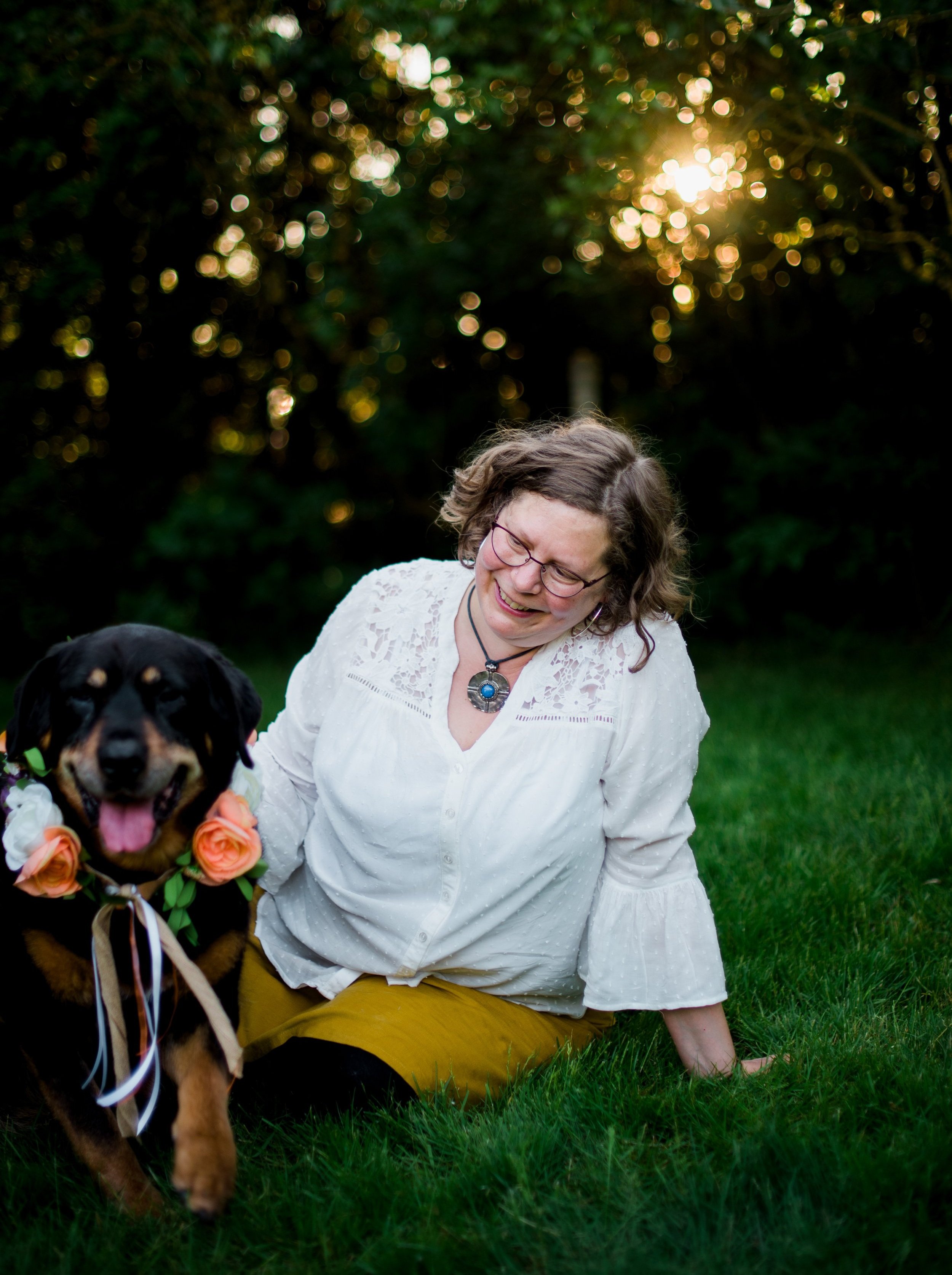
Hi, I’m Joanna. I’ve been practicing animal communication for more than 20 years, and it still fills my heart every time an animal shares something that helps their person understand them in a new way.
For me, this work is about deepening the connection between you and your pets by helping your pet feel heard and helping you understand your pets’ unique feelings, needs, and perspective on life and purpose.