How do I stop my cat from waking me up?
Questions like “How do I stop my cat from waking me up?” are all over Reddit. In my experience as an animal communicator, the best possible solutions won’t be found by focusing on just stopping the behavior.
It’s about understanding the root of the behavior. Because animals are more emotionally complex than most people realize, and what drives their early morning wakeup calls isn’t always just the drive for breakfast.
Dear Intuitive One,
My cat, Miss Kitty, is an exceptional communicator. But when she is feeling big complicated feelings that she doesn’t even fully understand, she tends to act out.
Her most recent behavior was waking my husband up every morning around 4 am. She would sit near his head and ever so softly put her wet little nose as close to his head as she could without actually touching him, and just hang out there, breathing.
It was very effective. Those kitty vibes (and kitty breath) woke him up within 30 seconds. He would bolt out of bed, knowing that falling back asleep was futile, and Miss Kitty would meow excitedly and run towards her food bowl to get her morning crunchy treats.
Through the lens of animal behavior, her actions would have been summed up as early morning food-seeking behavior and treated as a problem to be fixed.
But looking at the situation through the lens of animal communication, we knew it wasn’t entirely about food.

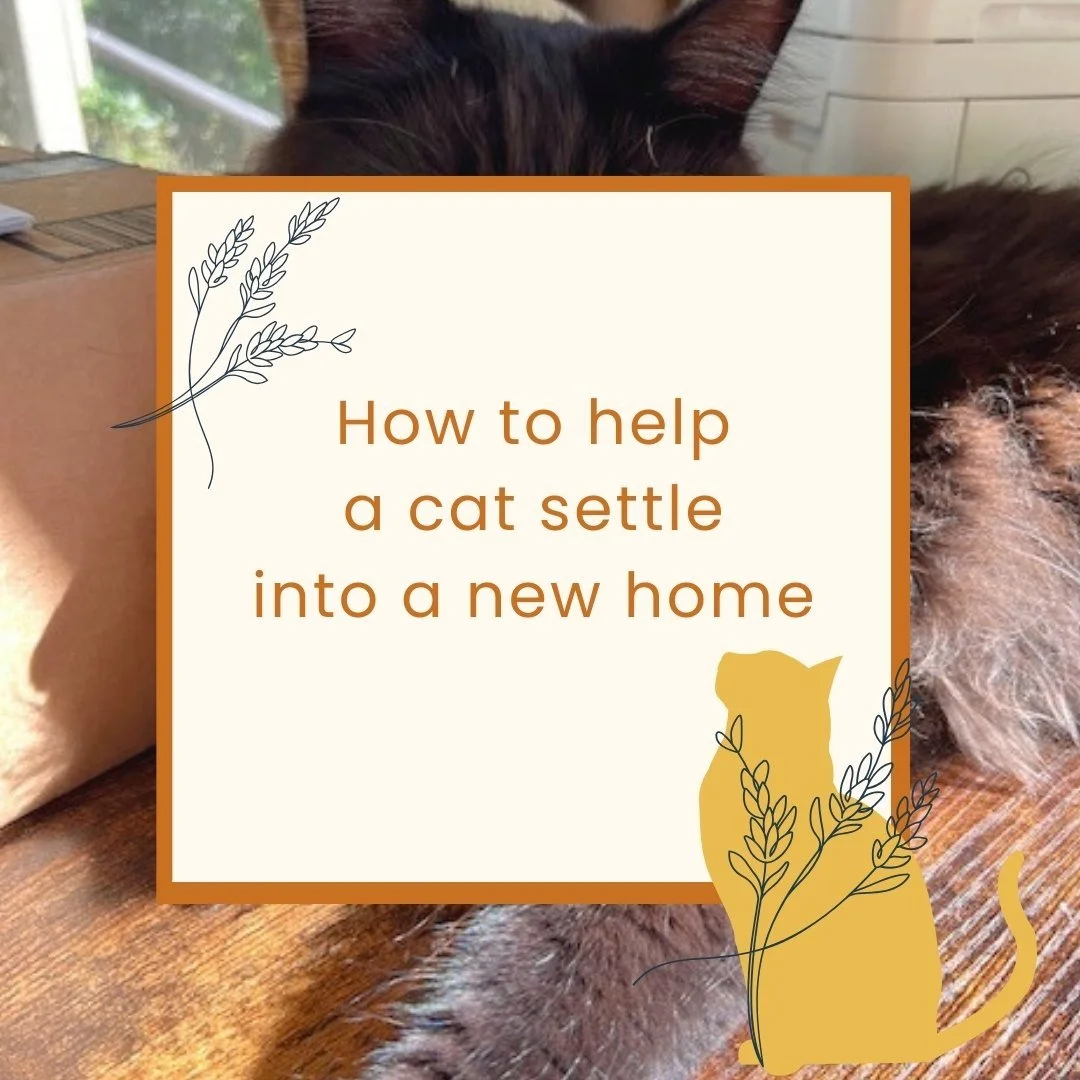
Photo: Miss Kitty in one of her favorite afternoon napping spots, feeling happy and heard.
What was really behind our cat’s early morning food requests
One early morning, her head-snuffle breathing shenanigans woke me up. I got up with her and shut the bedroom door so my guy could get a bit more sleep.
I poured myself a cup of hot peppermint tea and snuggled up on the sofa, and Miss Kitty curled up beside me for a few moments, only to jump up, scurry to the bedroom door, and frantically start scratching it.
After giving her a few of her favorite morning crunchy treats and trying to distract her with toys and snuggles, I realized that nothing was going to distract her. She was insistent on getting back into the bedroom. Exhausted and more annoyed than I want to admit, I intuitively tuned in with her and asked her, “What’s up? Can you tell me about what you are feeling right now?”
Here’s what Miss Kitty said: “I am so worried that I can’t check on Steve right now. I just need to know he is okay. That’s why I check on him at night, I want to make sure he is okay.” Her sharing was laced with big complicated emotions, including worry, a touch of panic, and what I can only describe as a distant and ancient heartache not even related to Steve at all.
After she shared her feelings, I opened the bedroom door, and she jumped on the bed and checked him out, then happily joined me on the sofa to lounge on her heating pad and fall back asleep.
It’s been 4 weeks since the behavior stopped
After hearing about what Miss Kitty had been feeling and was worried about, Steve had a conversation with her. He let her know that when he is sleeping, he is okay, even if the door is closed.
Now Miss Kitty is back to sleeping between us, through the night, all the way until the alarm goes off. She still checks on Steve, but by simply looking over at him to make sure he is still there and okay before falling back asleep herself.
I love the way this situation highlights how animal communication works, and it highlights what this work is not about. It’s not about telling a complex, intelligent being to stuff their feelings and just behave or become something we find more pleasing or convenient. (That’s a symptom of narcissism, not friendship.)
Instead, intuitive animal communication gives us the chance to transform the assumptions that she was just training us to get up and give her cookies, or that she was somehow trying to manipulate us, or that her actions were something that we should have just trained out of her, so we can instead understand her experience through her eyes.
The magic of this work is in how it helps us to understand the feelings behind behaviors. Not to control them, but to deepen our empathy so we can create solutions that take our pet’s needs into account too. And it helps us treat our pets with the same love and kindness we crave ourselves.

A little about me
Hi, I’m Joanna. I’ve been practicing animal communication for more than 20 years, and it still fills my heart every time an animal shares something that helps their person understand them in a new way.
For me, this work is about deepening the connection between you and your pets by helping your pet feel heard and helping you understand your pets’ unique feelings, needs, and perspective on life and purpose
Understand what your pets need to feel safe, loved, and intuitively connected with you
See the world through your pet’s eyes so you can truly understand what they are feeling and why.
“Joanna provided what I can only describe as a family counseling session with myself and my cat, and I came away with such a deeper understanding of what my cat Phil needs from me, and what I can do to help him feel safe and loved.”
- Stephanie R. - via Google reviews